Hajichi is the most commonly used word for Okinawan ancestral tattoos which were banned by the Japanese Meiji government in 1899 as part of a broader campaign of forced assimilation. As an Indigenous cultural practice, hajichi was an integral part of a woman’s coming-of-age and tied closely to Ryukyuan spirituality. Different markings correspond to natural elements of the earth, sea, and sky and the ichichibushi, a five-point star on the right wrist enables a woman's ancestors to recognize her in the afterlife. Today, a younger generation of individuals with Okinawan ancestry are seeking to revitalize the practice and to understand its changing significance in a contemporary context. The movement to revitalize hajichi has grown exponentially since 2021 with more than 20 cultural practitioners across the Okinawan global diaspora.
Hajichi Yuntaku Project seeks to
- Increase public awareness of hajichi revitalization
- Center voices of Shimanchu community
- Support the creation of resources by and for Okinawan community
- Promote engagement with Okinawan cultural practitioners in ways that value their expertise.
Hajichā Spotlight
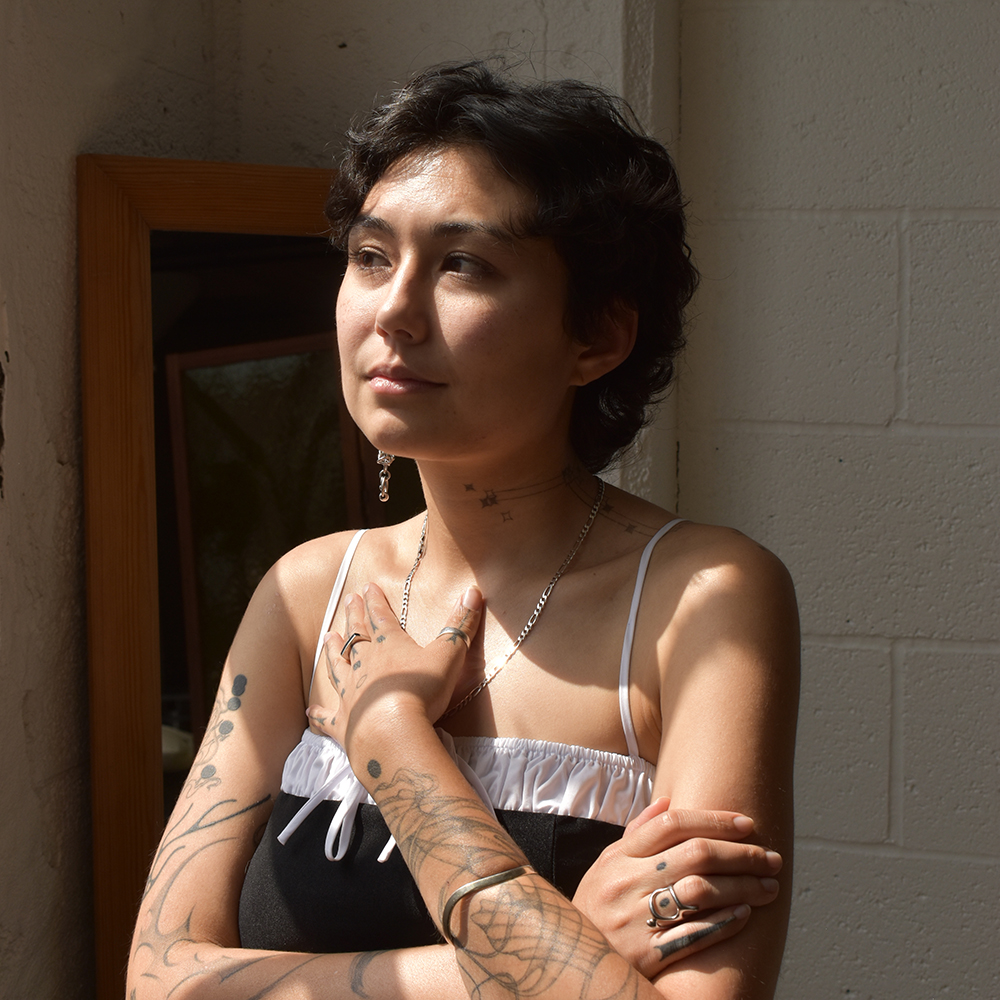
Ava Chirū Kvapil, they/she (Long Beach, CA)
“I think it’s worth rethinking hajichi in terms of gender, not that it’s something I totally want to change just yet (as I know it’s still just making a comeback), but I think it’s worth understanding hajichi from the complexity of today’s lens (or thinking about genderqueer individuals that certainly existed back then).”
What is your preferred name and gender pronouns?
Ava Chiru Kapil, they/she
How old are you?
28
Describe your race and ethnicity.
Biracial, white and East Asian, half Czech and mixed Western European & half Uchinānchu
Describe your Okinawan ancestry and family migration story.
I am yonsei (fourth generation). My mom is full Okinawan, sansei born and raised in Honolulu. My grandma was raised in Honolulu and my grandpa in Hilo. Two sets of my great grandparents immigrated to Hawai’i (mainly Oahu and Big Island) in the early 1900s. My grandma’s parents came from Uruku (Oroku) and Urashī (Urasoe). My grandpa’s parents came from Nagū (Nago) region in Northern Uchinā.
Where do you currently reside?
Long Beach, CA
Which contact information would you like shared on the website (email, IG handle)?
Instagram: @chiruu_tattuu
Email: chiruutattuu@gmail.com
Website
How did you first learn about hajichi?
Possibly my brother via his random discovery on the internet? Around 2019-2020?
What attitudes and associations did you have about hajichi? Does this differ from your family? Explain.
Honestly I had none as my mom had no knowledge of hajichi prior to me. I’m not sure if my grandma or grandpa had knowledge of hajichi either but it didn’t seem to be discussed much or known in my family if this info didn’t make it to my or my mom’s generation. What I can say is that my mom had no prejudice or negative feelings toward hajichi upon discovering it with me and was intrigued by it, eventually getting her own from me! She’s an artist so I think she’s a lot more open to these things than some.
What was your experience receiving hajichi?
My first experience receiving hajichi was actually when I tattooed it on myself—my second time doing hajichi. I did a complete hand in Shuri royalty style. This was partially a way for me to practice the skill, while also being a step in embracing my Uchinānchu and creative identity. I later received the beginning symbols of my hajichi on my right hand from Hiromi Tōma and Erin Nagamine (fellow hajichās). Tontonmī from Hiromi and a finger spear/enlargened tontonmī from Erin. Both times we did hajichi for each other, so it was a special exchange. Both experiences were a great way of sharing each other’s personal experiences with doing hajichi and how we connect with our local Shimanchu communities.
What motivated you to become a hajichā?
It was honestly a pretty organic journey. I started off wanting to learn how to tattoo (handpoke specifically) in 2020 (when the pandemic started) and being a year out of art school with not a lot to do and an interest in learning a new skill. Then during that same time I also became invested in learning more deeply about Okinawan culture and my family history. I ended up connecting with Shimanchu online and found a community that way, something I never had before. So when I started posting my tattoo work, eventually I had Shimanchu folks reach out to me about wanting me to start their hajichi. And from there I realized hajichi was the perfect confluence of things I had been interested in and began wanting to explore/practice it more.
How would you describe your role as a hajichā? Are there techniques, styles, rituals, or values that are especially important to your practice?
I would say the handpoke technique is important to my practice as it is traditional to how hajichi was done (versus machine). I think this technique is somewhat more gentle, methodical, and meditative that lends itself to a ritualistic feel and allows me to connect/chat with my hajichi clients. I also prefer to hand-draw all my hajichi designs directly on the skin as it feels more hand-made and personal to each recipient. I also believe in keeping hajichi a closed practice. By this I mean that I only do hajichi for those of Rūchūan heritage, as the practice was forcibly erased at one time and should be reclaimed by and for the people of our culture.
How do you see hajichi revitalization evolving and changing? What is your hope? I think a big thing that’s coming up right now is how hajichi fits within the frame of queerness and genderqueer identities. Although hajichi was traditionally a female/women-based practice, in today’s times we are exploring what it means to live beyond a binary of gender or an openness to that fluidity. I personally have tattooed hajichi for a good number of genderqueer individuals. I think it’s worth rethinking hajichi in terms of gender, not that it’s something I totally want to change just yet (as I know it’s still just making a comeback), but I think it’s worth understanding hajichi from the complexity of today’s lens (or thinking about genderqueer individuals that certainly existed back then). I think generally speaking it is natural for hajichi to evolve, as it likely did since its hundreds of years of existence. Culture and art are not a stagnant thing and are naturally going to move fluidly through time as it crosses many individuals hands, so to speak.
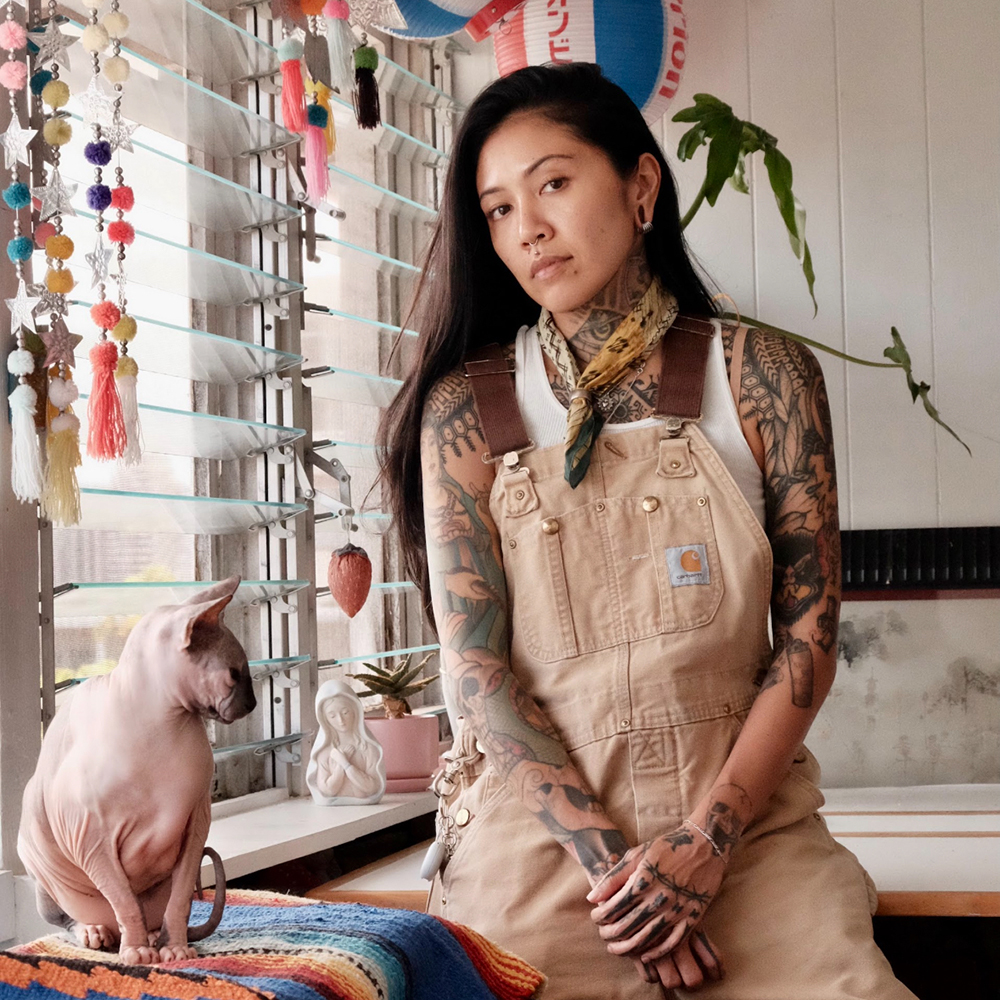
Erin Nagamine, she /her (Makiki, Oahu)
@nagaminesan / Erin.ntattoo@gmail.com
“It was a way for me to feel connected to my family and culture and I feel honored to wear and continue this practice. Hajichi also helps me connect to my culture by meeting many people through getting and receiving Hajichi. Talking story about our personal family histories also helps inform what I do.”
What is your preferred name and gender pronouns?
Erin Nagamine
How old are you?
35
Describe your race and ethnicity.
I am half Filipino (mother) half Okinawan (father)
Describe your Okinawan ancestry and family migration story.
My father is Okinawan and his grandparents on his fathers side (Nagamine from Kanegusuku) came to Oahu to work on Ewa Sugar Plantation and his mothers side (Agena from Gushikawa) came to Makawao Maui to also work on the plantation.
Where do you currently reside?
Makiki, Oahu
Which contact information would you like shared on the website (email, IG handle)?
Instagram: @nagaminesan
Email: Erin.ntattoo@gmail.com
How did you first learn about hajichi?
I first learn about Hajichi from my hair dresser in LA around 2013/2014 who was Okinawan himself and was from Okinawa and recognized my last name as Okinawan.
What attitudes and associations did you have about hajichi? Does this differ from your family? Explain.
My family is very open and interested in the history of Hajichi, they embrace the culture and history even though only one of my older aunties have Hajichi. A few more of my elder aunties are interested in getting them as well. And myself and 2 of my cousins have started our Hajichi.
What was your experience receiving hajichi?
It was a way for me to feel connected to my family and culture and I feel honored to wear and continue this practice. Hajichi also helps me connect to my culture by meeting many people through getting and receiving Hajichi. Talking story about our personal family histories also helps inform what I do.
What motivated you to become a hajichā?
I was machine tattooing for many years before I heard of Hajichi. And it felt like a personal calling that made my life and interests feel like it came full circle. Being from two separate cultures that have deep history and ties to tattooing as a folk tradition felt very validating to me and gave my practice a deeper meaning and purpose driven direction.
How would you describe your role as a hajichā? Are there techniques, styles, rituals, or values that are especially important to your practice?
I mostly hand draw Hajichi directly onto each person. Majority of my practice is done hand poke, though I am open to doing it by machine if that is the wearers preference. I have only done 2 machine made Hajichis. Somethings that are important to me about the process is having a true collaboration with the person receiving Hajichi, taking in their own ideas and perspectives of what they see their Hajichi to look like because to me it is important for the wearer to feel proud and connected to what they are receiving.
How do you see hajichi revitalization evolving and changing? What is your hope?
I think the practice of Hajichi is already changing. But my biggest want is for the whole of the Okinawan community embracing this practice with pride and see it as something that is deeply our and cultural so that we can reclaim it as a part of our identity as people of Ryukyu all over the world.
I love all the work Hajichi and non Hajichi are doing for our community as a whole. And it really makes me proud to be in community with all of you :)
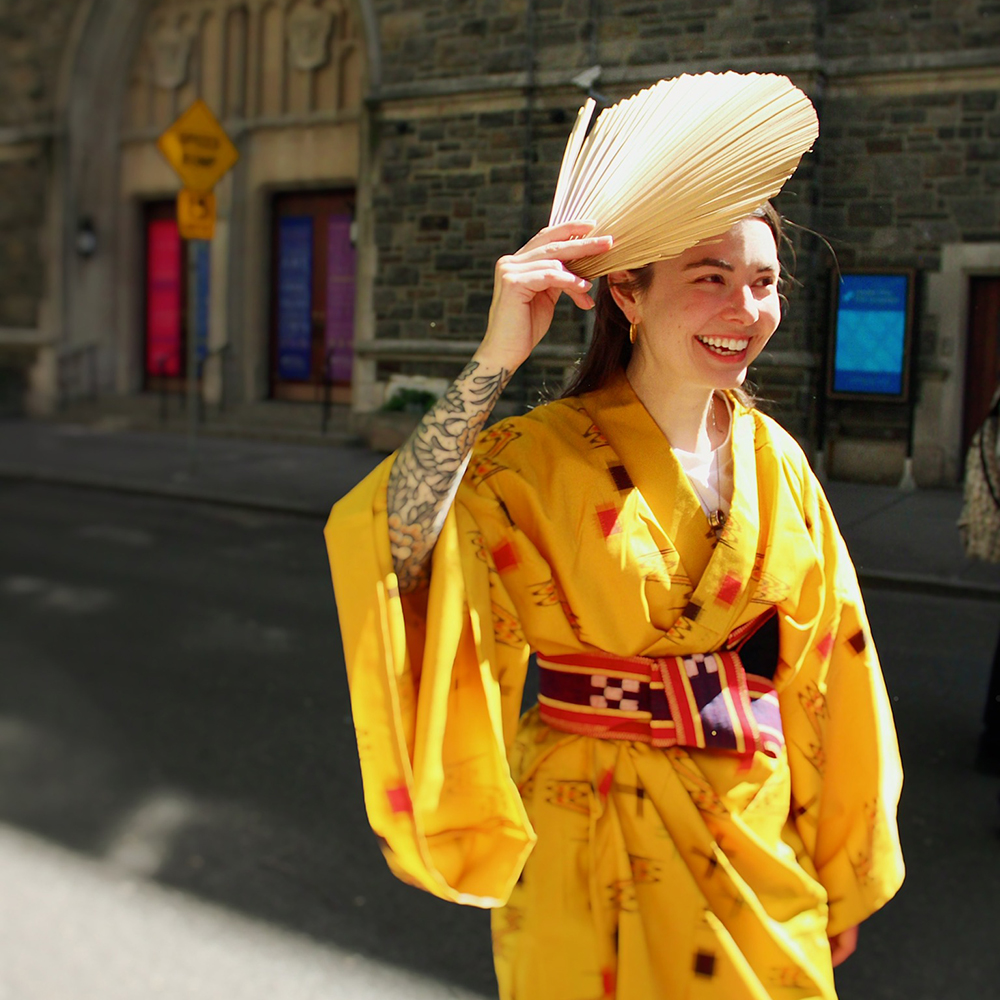
Co Lewis, she/they (New York City, NY)
“Each of the modern hajichaa has our own approach to hajichi, and what is important to us in this 'revival.' My hope is that we all continue to be protective and loving in our approaches and education.
I hope that we are critical of the resources we base our work on, and amplify the voices of our community ancestors. We are building our practices on a broken history, and I hope that we are diligent growing from this foundation. I am excited for the day where hajichi are a common knowledge and practice that we celebrate as a global community.”
What is your preferred name and gender pronouns?
Co Lewis
How old are you?
35
Describe your race and ethnicity.
Mixed: Ryukyuan/Okinawan and White
Describe your Okinawan ancestry and family migration story.
Prior to the war my Ryukyuan ancestors lived in Uchinaa, in Enobi (Yenobi), Gushichan. Our paternal surname is Oomine/Omine (大嶺). My grandmother's family spent 18 years in Saipan as cotton farmers following Japanese labor relocation (where my grandmother was born), and were repatriated to Okinawa after American occupation. My grandmother married a Marine (my grandfather), and immigrated to the USA in violation of anti-interracial marriage laws where they raised their family. The rest of my extended Okinawan family continues to live in Uchinaa. Raised in a Marine family myself, I spent some of my highschool years in Uchinaa around the bases before returning to the states.
Where do you currently reside?
New York City, NY, USA
Which contact information would you like shared on the website (email, IG handle)?
Email: hajichirevival@gmail.com
Instagram: @shimanchuhajichi
Website
How did you first learn about hajichi?
I don't recall when I first learned about hajichi as a historic practice, and was raised with the knowledge to some extent. I began researching it more deeply around 2019, when I decided to shift away from my investment in aesthetic and artistic tattooing and focus on meaningful tattooing.
What attitudes and associations did you have about hajichi? Does this differ from your family? Explain.
Prior to hajichi's revitalization I thought of hajichi as a lost practice, and my family likely did as well. As hand tattoos that cannot be hidden in any normal setting, I saw and see hajichi as an enormous commitment. I believe my family members have similarly been intimidated by the weight and stigma of all tattoos, and see hajichi as hand tattoos with more weight. They are mostly disinterested in the cultural practice of hajichi because of the modern stigma.
What was your experience receiving hajichi?
I intend for hajichi to be a long-term practice for me both in giving and receiving, and will wait to receive more pieces until the right time or experience. I waited many years after beginning to research hajichi history and even after beginning to tattoo as a hajichaa before receiving my first hajichi (tontonmi). I received my first piece of hajicha (one 'initiation' set) when I was married, the second when my son was born, and the third (my first set of yainusachi) after the death of my niece. Our yainusachi point into the future we walk and cannot return from. To me, they mark the ways we are changed by life experiences and our hopes for the future. Nothing has been as meaningful to tattoo on my body (and to see and display every day) than these reminders of the lives that have shaped my own, particularly that of my late niece.
What motivated you to become a hajichā?
I am a deeply philosophical person, perhaps to a fault. There are several qualities in the practice of hajichi that are important to me to be embodied by our revival -- particularly the consecutive nature of receiving pieces over time, the milestone-based practice of hajichi, the individual meaning associated with each piece, and its adaptation into modern lives. I would like to see hajichi practiced with honor for the history that brought us to this point, and a recognition of the ways that we inherently change hajichi by practicing it now, in our diasporic communities. I feel the best way to see hajichi be practiced in the ways I wish is to be that practitioner and wearer myself.
How would you describe your role as a hajichā? Are there techniques, styles, rituals, or values that are especially important to your practice?
As a hajichaa, I see my role as an educator and collaborator for each client. I am also a student of our ancestors, and a continuation of a practice that was intentionally vilified and broken. I tattoo those of Ryukyuan heritage exclusively. I tattoo specific island-based designs with matched ancestry, with as much specificity as I can for specific island groups and townships based primarily on first-hand historic records. All of my hajichi are done by hand-poke, as I believe the time it takes to sit and receive the hajichi (and the pain that comes with it) is an important part of my practice. I tattoo designs in traditional placements only (hands, wrists, forearms), again, because the visual commitment is an inextricable part of hajichi to me. I encourage following a traditional timeline, as best we know it, in receiving hajichi; this is open to interpretation and is a tailored discussion that I have with each new client. In general, I prefer to tattoo with the intention to grow designs over future years. As clients are interested and welcome the practice, I include elements of ritual into the tattoo space, such as ancestor veneration. I welcome family and friends, as appropriate, to join the clients while they are tattooed. As a queer person, I take a gender-expansive approach to hajichi, with deep respect for the gendered history of our culture and tattoos. How this reflects in each individual is a personal conversation that I am always happy to have in 1:1 consultation. A lot of the historic literaruture about hajichi is from second-hand reports and outsider interpretations, often with repetitions of one story that cement a specific narrative. I approach much of this work with deep skeptisim and approach resources with a decolonizing lense. This directly informs how I see hajichi history and how I practice.
How do you see hajichi revitalization evolving and changing? What is your hope?
Each of the modern hajichaa has our own approach to hajichi, and what is important to us in this 'revival.' My hope is that we all continue to be protective and loving in our approaches and education. I hope that we are critical of the resources we base our work on, and amplify the voices of our community ancestors. We are building our practices on a broken history, and I hope that we are diligent growing from this foundation. I am excited for the day where hajichi are a common knowledge and practice that we celebrate as a global community.
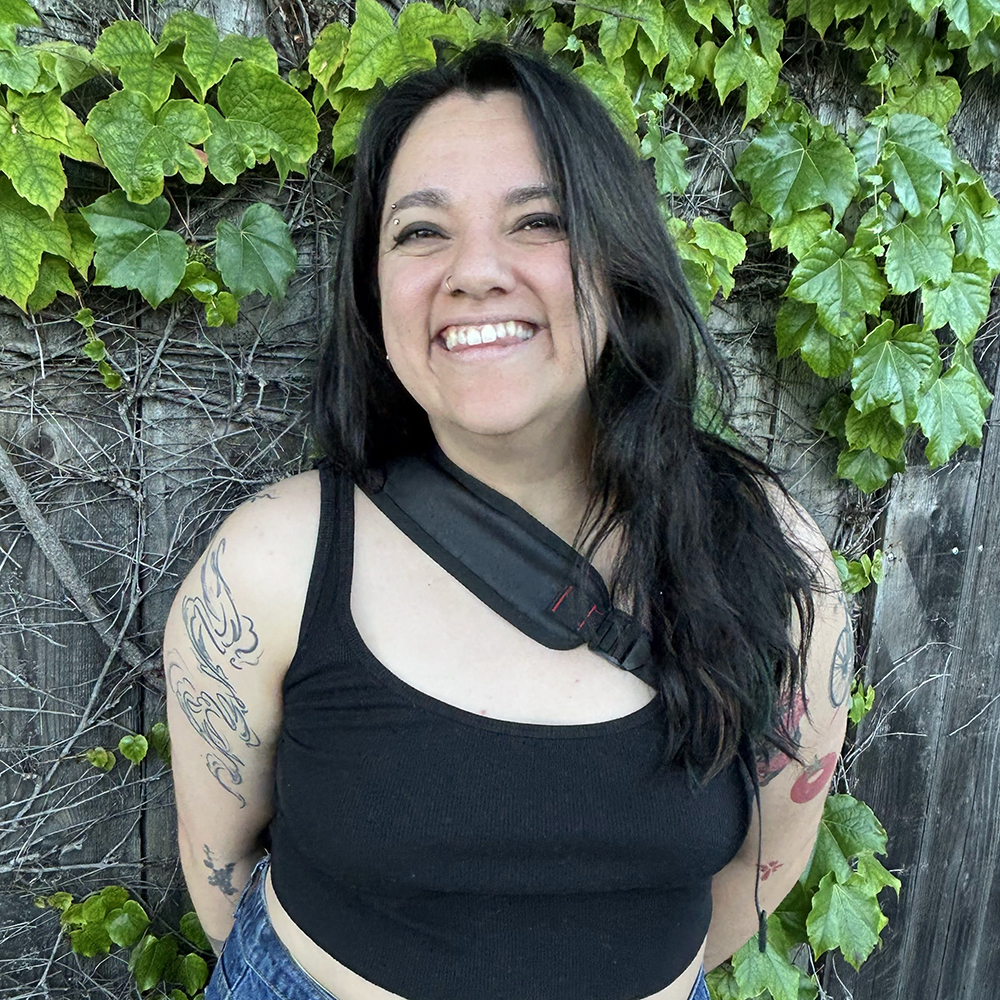
Lyss Akemi, they/ them (Oakland, CA)
@lyss.akemi.tattoo / lyssakemi@gmail.com
“Hajichi has helped me to feel more connected to my heritage, especially knowing that the style I’ve chosen is directly connected to my ancestors... Appointments always make me feel more connected to my heritage even if I am tattooing someone else because of the shared stories that we have. We always find similarities in our stories even if we’ve lived very different lives.”
What is your preferred name and gender pronouns?
Lyss Akemi
How old are you?
31
Describe your race and ethnicity.
Quarter Okinawan, White
Describe your Okinawan ancestry and family migration story.
My grandma was born and raised in Okinawa on the main island near Urumashi. She is the eldest daughter of 8, so we still have many family members in Okinawa as she is the only one who moved to the US. Grandma has said that we have direct lineage to Shuri and Nakijin, and I believe we have a well documented family tree dating back to these eras.
Where do you currently reside?
Oakland, CA
Which contact information would you like shared on the website (email, IG handle)?
Instagram: @lyss.akemi.tattoo
Email: lyssakemi@gmail.com
How did you first learn about hajichi?
The Hajichi Project ~2020 ish
What attitudes and associations did you have about hajichi? Does this differ from your family? Explain.
Hajichi has helped me to feel more connected to my heritage, especially knowing that the style I’ve chosen is directly connected to my ancestors. My grandma has generally been anti-tattoo but has warmed up to it through my practice and has even recalled that her grandma also had hajichi. I am unsure of how my family in Okinawa feels about it though I have cousins there that are around my age that love that i’m doing Hajichi!
What was your experience receiving hajichi?
Hajichi appointments always make me feel more connected to my heritage even if I am tattooing someone else because of the shared stories that we have. We always find similarities in our stories even if we’ve lived very different lives. I gave myself my first hajichi, but hope to travel to receive more from other practicing hajichiaa when the opportunity arises!
What motivated you to become a hajichā?
To be a part of something greater than myself. I think the revival practice is so important and beautiful and I want to be able to give people similar to me a way to connect with their ancestry even if specifics of their families migration stories have been lost in time.
How would you describe your role as a hajichā? Are there techniques, styles, rituals, or values that are especially important to your practice?
I really love to created a comfortable and collaborative space for my clients. Before we decide to work together, I send my clients my Hajichi document to look over which explained my place in the revival along with visual examples of different styles of Hajichi. Clients have appreciated this a lot because it is often difficult to find specific visual representations of regional styles. For techniques I offer machine or handpoke or a mix of both depending on the clients preference. I usually spends the days leading up to an appointment researching the clients known heritage and examples of styles for their region and then share any new or interesting information that they might not have seen. I love to have a calm environment during the tattoo, with quiet instrumental music.
How do you see hajichi revitalization evolving and changing? What is your hope? I see hajichi rapidly expanding and hope that as many Uchinanchu as possible become aware of and participate if they want to. I feel passionately about figuring out how to practice this while being inclusive to queer and trans communities while also respecting traditional values. I hope to see Hajichi evolve with the contemporary in a way that makes sense but doesn’t stray too far from its origins.
Events
Select Community Resources
- ETHNOS CINEMA. Nantō zanshō onnatachi no hajichi : Okinawa, Miyako Shotō no irezumi 南島残照女たちの針突 : 沖縄・宮古諸島のイレズミ / 北村皆雄監督, 三浦庸子制作 = Hajichi : Women's tattoo tradition in Okinawa & Miyako Islands, Japan. Vimeo. 28 September 2022.
- Harrison, Haley. “These Sacred Tattoos Were Banned in Okinawa. A New Generation Is Bringing Them Back.” National Geographic, 22 Aug. 2025.
- Kina, Laura. “Ancestral Cartography: Trans‑Pacific Interchanges and Okinawan Indigeneity.” Asian Diasporic Visual Cultures and the Americas 6.1‑2 (2020): 48‑70.
- Matsumura, Wendy. “A History of Okinawan Clothes: Three Figures of Indigenous Women Against the Japanese Modernization of the Ryukyu Islands.” The Funambulist, 15 Clothing Politics.
- Shimanchu Podcast. “Episode 3 Pt. 1 – Hajichi (with Co‑Lewis, June Owatari, and Hilson Reidpath).” Shimanchu Podcast, 8 August 2021.
- Shimanchu Podcast. “Episode 3 Pt. 2 – Hajichi (with Co‑Lewis, June Owatari).” Shimanchu Podcast, 11 September 2021.
- Takara, Emily. Hajichi Stories.
- Tonouchi, Lee A. “Hajichi Stories — Three Local Women Tell Why They Got Their Okinawan Hand Tattoos.” Discover Nikkei, 7 Sept. 2023.
- iYASASA RADIO. “#32 ハジチャー (Moeko Heshiki) Reviving Okinawan Women’s Tribal Tattoo.” iYASASA RADIO, Spotify, 10 Mar. 2022.